Thank you for reading this post, don't forget to subscribe!
In structural manufacturing, a weld is only one part of a much larger component. Frames, assemblies, tanks and other fabricated structures can involve multiple profiles, different joint configurations, complex geometries and welding positions. Automating one welding seam does not necessarily address the requirements of the complete component.
This is where structural welding automation needs a broader approach.
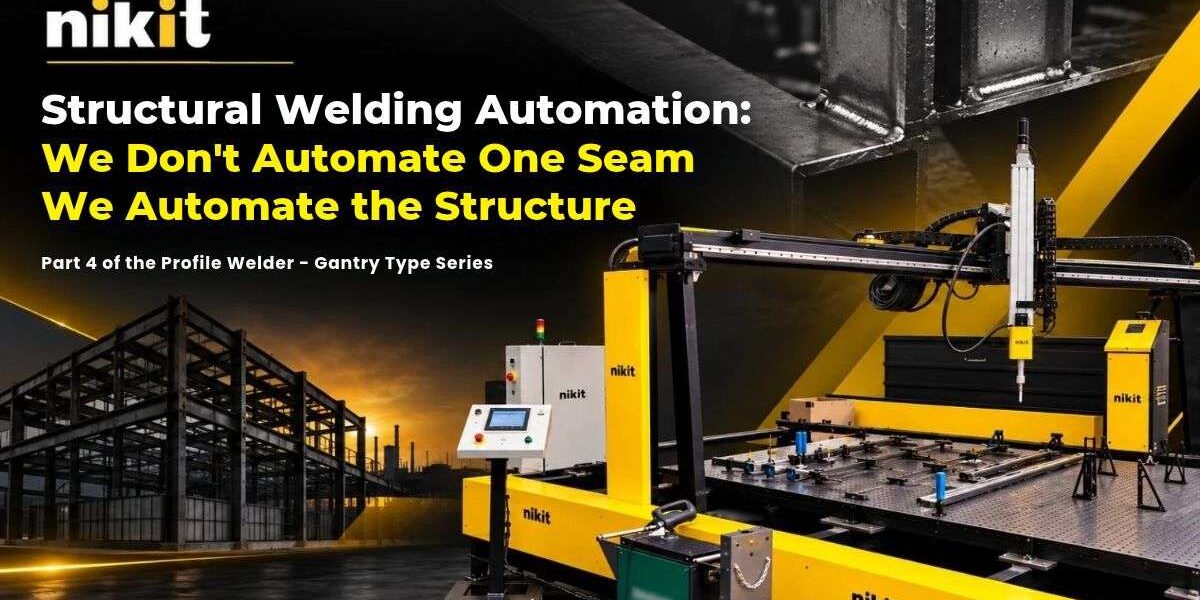
A welding system must consider how the component is positioned, where each weld is located, how the torch reaches different joints and how the welding sequence is completed. With a gantry-type Profile Welder, automation can be developed around the geometry and production requirements of the complete structure.
At Nikit Engineers, the objective is not simply to automate an individual weld. It is to engineer a welding system that considers the structure as a whole.
Why Structural Welding Automation Must Think Beyond One Weld
A structural component rarely consists of a single straight seam. Depending on its design, it may contain long welds, cross-members, corners, intersections and joints at different levels.
Each welding location can introduce a different requirement. The torch may need to change direction, move across multiple axes or reach a position that cannot be addressed through one fixed welding motion.
Therefore, effective structural welding automation must consider several factors:
- Component geometry and dimensions
- Number and location of welding joints
- Joint configurations and torch accessibility
- Welding sequence and component positioning
- Multi-axis movement requirements
- Production volume and repeatability
Looking at these requirements together helps manufacturers move beyond isolated weld automation. Instead, the welding system can be engineered around the complete component and its manufacturing process.
Component + Torch Interpolation: The Foundation of Flexible Welding Automation
One of the important considerations in complex structural welding is the relationship between component geometry and torch movement.
Torch interpolation enables coordinated movement across multiple axes so that the welding torch can follow the required path in relation to the component. This becomes particularly useful when a structure contains different welding positions, changing directions or complex joint locations.
For example, a fabricated frame may include long seams along its sides, cross-members, corner joints and intersections. Each location can require a different torch path and movement sequence.
A gantry-type Profile Welder can be configured to address these requirements through coordinated multi-axis motion and interpolation-based movement.
Rather than treating every weld as an independent operation, the system can be developed around the component’s geometry and welding sequence.
This approach supports greater flexibility when handling different structural designs and production requirements. The objective is to make the welding process work around the component instead of forcing the component into a limited welding movement.
One Profile Welder. Multiple Structural Welding Applications
Structural welding automation can support a wide range of manufacturing requirements. The suitability of a system depends on component dimensions, geometry, joint locations, welding processes and the selected machine configuration.
Profile Welder applications can include:
- Frames and structural assemblies: Welding different profiles and joints within fabricated frames.
- Rebar structures: Supporting welding requirements across structural reinforcement assemblies.
- Cycle frames: Addressing multiple welding locations across frame geometries.
- Fuel tanks: Automating selected welding operations based on tank design and configuration.
- Racks and fixtures: Supporting repeatable welding across fabricated structures.
- Stators: Addressing welding requirements in specific stator manufacturing applications.
- Truck bodies and machine beds: Supporting larger structural components with varied joint locations.
- Mounting brackets: Automating selected welding operations across different bracket designs.
These applications demonstrate why flexibility matters. A manufacturer may work with different component sizes, profiles and welding sequences. The automation system must therefore be engineered according to the actual application rather than relying on a one-size-fits-all arrangement.
Why Structural Welding Automation Is More Than Motion
Automating structural welding involves more than moving a torch from one point to another. A complete solution brings together several elements that influence the production process.
These may include:
Motion control: Coordinating the required axis movements and welding paths.
Welding process integration: Incorporating the selected welding process and compatible equipment.
Fixturing and component positioning: Supporting the component in the required position throughout the welding sequence.
Sequence control: Managing the order of welding operations and movement between different locations.
Machine monitoring: Providing visibility into machine operation and relevant production information, depending on the selected configuration.
Profile Welder systems can include features such as interpolation-based motion control, sequence functions, smart weld-point selection, pause/play operation and data logging, depending on the machine configuration.
MachineData.ai can support machine and process-data monitoring, helping provide centralized visibility into relevant machine performance and production information. The available monitoring functions depend on the selected configuration and integration requirements.
When these elements are considered together, manufacturers can develop a more connected approach to structural welding automation.
From Individual Welds to Complete Structural Components
A useful way to evaluate a welding automation project is to look at the complete production sequence.
Consider what happens after one weld is completed. Where does the torch move next? Can it reach the next joint? Does the component require repositioning? How does the welding sequence account for different geometries and joint locations?
These questions help identify the actual requirements of the automation system.
For a complex structure, the engineering process may need to account for:
- The starting and ending points of each weld
- Torch accessibility across the component
- Movement between different welding locations
- Component geometry and positioning
- The required welding sequence
- Repeatability across production cycles
- Relevant machine and process-data requirements
This component-focused approach helps ensure that automation is designed around real manufacturing conditions.
The result is a welding system developed to address the complete structure, rather than simply automating one seam in isolation.
The Future of Structural Welding Automation
As manufacturing requirements evolve, welding automation must address more than individual operations. Manufacturers increasingly need systems that combine engineering, controlled movement, welding integration, production sequencing and machine-data visibility.
The Profile Welder – Gantry Type reflects this broader approach. Its application is not limited to one component or one welding movement. The system can be configured around different structures, joint locations and production requirements.
The real opportunity lies in bringing together Engineering + Motion + Welding + Data + Production Control within one connected automation approach.
At Nikit Engineers, structural welding automation is about understanding the component first and engineering the system around its manufacturing requirements.
We don’t automate one seam. We automate the structure.
FAQs
What is structural welding automation?
Structural welding automation uses engineered machine systems to automate welding operations across fabricated components such as frames, assemblies, tanks and other structures. It can combine motion control, welding-process integration, fixturing and sequence management to address multiple welding locations.
Why is torch interpolation important in structural welding?
Torch interpolation enables coordinated movement across multiple axes. It helps the welding torch follow required paths around different component geometries, joint locations and welding positions. This is particularly useful for structures that cannot be handled through one fixed welding motion.
What is the main objective of structural welding automation?
The objective is to develop a controlled and repeatable welding process around the complete component. This involves considering its geometry, welding locations, torch movement, production sequence and relevant monitoring requirements.